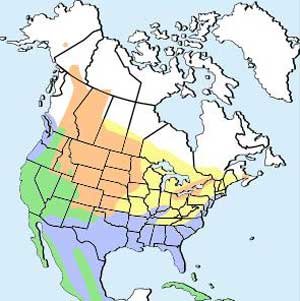
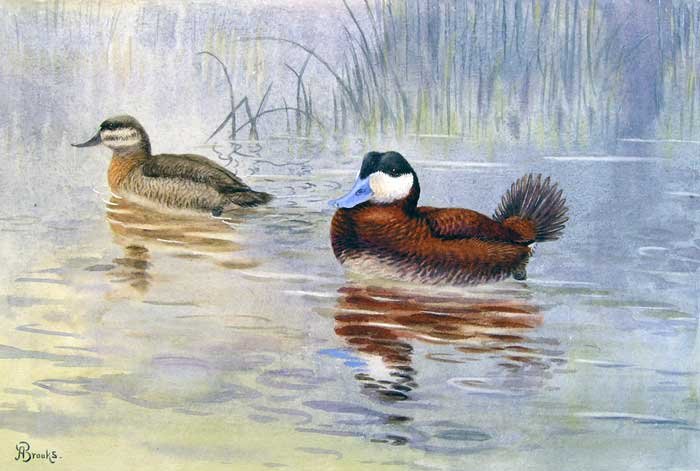
Major Allan Brooks DSO 1869-1945
Canadian Naturalist, Ornithologist, and Wildlife Illustrator
Allan Brooks was born at Etawah, northern India on February 16th, 1869. Allan’s father, William Brooks, was an engineer and ornithologist. He collected bid specimens for the British Museum. Allan was named after Allan Hume, ornithologist and founder of the Indian National Congress and personal friend of William Brooks.
William Brooks hoped one of his sons would become an ornithologist and Allan showed promise in this field early in his childhood. At the age of only two Allan often handled his father’s bird specimens and was considered then to have a born talent for being a naturalist. Allan was sent to England in 1874 when he was about five years old and spent the next eight years living with his grandmother and maiden aunt while attending school in Northumberland.
A special friend of William Brooks, John Hancock, considered to be the father of modern taxidermy, spent a lot of time with Allan and taught him about butterfly collecting, botany, and basic taxidermy. It was said that Allan considered such things as board games or sports a waste of time and he preferred taking walks in the moors and observing wildlife.
In 1881, at the age of 54, William Brooks retired from his engineering profession and decided to take his family to Canada. Mary Brooks was in poor health and doctors recommended that the Canadian climate could be helpful for her. As well, William always wanted to be a farmer in Canada. A desire shared by many Englishmen at the time. The family (three boys and two girls) landed in Quebec and, shortly after their arrival, Mary Brooks passed away at the age of 42. She was buried in Quebec.
William then took his family to Milton, Ontario where he bought a 200-acre farm. It was about this time when Allan began sketching birds and the surrounding countryside. Some 25 species of birds nested in the area and around the farm. Many famous ornithologists of the day visited the farm and were a great influence on Allan. He learned how to prepare bird skins and accompanied a number of these men on field trips.
1887 - 1896 - The family moved to British Columbia in 1887 and settled on a farm near Chilliwack. New species of birds and wildlife were available for Allan (who is now 18) to sketch and his knowledge and skills as an ornithologist continue to grow. Nearby Sumas Lake with its marshes was a paradise for breeding waterfowl in summer and a stopping place for migrating ducks, geese, swans, and cranes in the fall.
Within a year of arriving to B.C., William Brooks decided to return to Ontario. Cecil and Ted went with him and Allan returned later in the year. However, by 1894, Allan and his brother Ted returned to British Columbia and took up residence in Chilliwack near the former Brooks home. Allan and his father corresponded on a regular basis and their letters share observations and opinions on ornithology, farming and fruit growing.
From 1894 to 1896, Brooks was collecting small bird and mammal specimens from the Chilliwack area to be sent to ornithologists and natural history museums in Eastern Canada and the United States. (William Brewster, Outram Bangs, and Gerrit Miller were three of the more infamous ornithologists Brooks dealt with at the time). The prices Brooks received for his specimens were low by today’s standards. Small mammals and birds would fetch 25 or 30 cents each. Brooks sold a porcupine to Outram Bangs at Harvard University for $3.00 and John Fannin at the Provincial Museum in Victoria paid him $1.00 for a Coyote.
1897 - 1900 - Allan Brooks made his way to the Okanagan Valley in the late spring of 1897. He actually wrote to his father complaining about the heat.
In 1897, Brooks was contributing sketches and articles to the journal known as “Recreation.” In a letter to his father in 1898 he writes, “…I have an article or two in it every month for which I get $6.00 a month.”
In 1899, a short penciled note in one of Brooks’ diaries reads…”Left for Ontario February 10th. Returned April 8th.” Although he doesn’t mention it, this date records the time of his father’s death.
In the summer of 1900 Brooks left the Fraser Valley and traveled north to the Cariboo region. He reached Barkerville on July 20th and by the fall was collecting specimens around Quesnel and Cottonwood. He then teamed up with his friend Sidney Williams, a surveyor, and the two of them set up in a cabin six miles north of Cottonwood and trapped during the early fall. Williams left for Quesnel at the end of October and Brooks stayed behind to continue trapping.
1901 – 1906 - Brooks left for Okanagan Landing in September of 1901 where he met his brother Ted. Allan purchased a small boat and they made their way to Penticton and wintered there. In March of 1902, the brothers took their boat back to Okanagan landing. In May, Brooks began collecting fleas for the British Museum. One species of flea, which he took from a weasel, was given the scientific name Nearctopsylla Brooksi. Brooks was paid six pence per specimen and was credited for discovering at least fifteen new species of flea.
Brooks is back in the Fraser Valley in 1903. In October, he ventures up the coast and arrives in Campbell River and later in Comox observing and sketching birds. He spent the winter in Comox. In spring he ventured back down the coast to Nanaimo and through the Gulf Islands. He also stopped off in Victoria and visited the Provincial Museum and its curator, John Fannin.
By 1905, Brooks is back at Okanagan Landing. He continues to sketch, hunt big game, and collect specimens.
1906: A note in Brooks’ diary reads…”Sketches wanted by W.L. Dawson. Coloured at $5.00 each; black and white at $2.00.” Fifty-two species are listed and make up his first sizeable commission work as an illustrator. The two-volume “Birds of Washington” would later be published in 1909.
1908 – 1913 During 1908/09, Brooks was again traveling to observe, sketch, and collect birds. He ventured to the coast and visited Vancouver Island and Victoria. He also went to the Seattle area and then on to Alberta to visit the regions around Edmonton and Calgary.
He returned to the Okanagan on November 20th, 1909 and wrote, “Home today. Beautiful day; no snow south of Vernon except on the mountains.” Brooks did a bird census every December. His 1909 count included 24 species and 473 individual counts.
During the winter of 1910/11, Brooks took a six-week trip to California to work on the illustrations for Dawson’s new book “The Birds of California.” He returned in March of 1911 after having met with nearly every birdman and biologist in the state.
In July of 1911, Brooks went to Vancouver for ten days to compete in the British Columbia Rifle Association matches. In August he went to Kamloops to compete in rifle matches there and to Armstrong in September for further matches.
During 1912/13, Brooks devoted a lot of his time to the local rifle ranges. He also traveled to Vancouver to compete in an International Rifle Match then on to Toronto to compete in rifle matches there.
1914 – 1918 - An entry in Brooks’ diary for June 1914 simply reads “Left for England via Montreal, leaving the latter place on the 21st with the Canadian Rifle Team.” Brooks was off to Bisley and the rifle matches taking place there.
War broke out while Brooks was at Bisley. After the matches he attempted to enlist in a Scottish regiment where it was discovered that he already held an officer’s commission in the Canadian Militia (Lieutenant in the Rocky Mountain Rangers out of Armstrong). He was sent back to the training camp of the 1st Canadian contingent at Valcartier, Quebec.
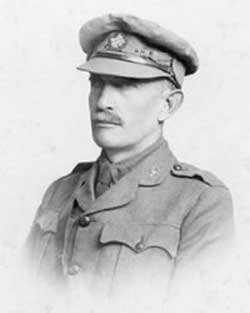
In the fall of 1914, at the age of 45, Lieutenant Brooks was off to England and the war in Europe. Upon his arrival in France he was promoted to Captain and a month later reached the level of Major in the Canadian Expeditionary Force.
Brooks’ primary role in World War 1 was that of a sniper. His skills were such that he was mentioned in three dispatches and received the Distinguished Service Order.
Brooks suffered some hearing loss while fighting and was eventually pulled from the trenches and put to the job of giving instructional courses on the rifle and sniping.
During his time overseas, Brooks continued to observe and sketch wildlife even from the trenches right. He sent many renderings to his friend Percy Taverner whom he corresponded with regularly.
1919 – 1923 - Brooks arrived back at Okanagan Landing on April 15th, 1919. He quickly picked up where he left off five years previous and began observing and sketching birds. The war changed him some and Brooks no longer desired to attend rifle matches or hunt big game. Instead, he devoted himself entirely to ornithology.
Brooks spent the winter of 1919/20 in Comox with Cyril Piercy, Postmaster at Comox, and set up a temporary studio above the post office. Brooks conducted a Christmas bird count at Comox and recorded 56 species and 7,156 individual sightings. Later, in the spring, Brooks traveled up the coast to Prince Rupert and the Queen Charlotte Islands.
Brooks was off to eastern Canada in the fall of 1920 to visit his friend, Percy Taverner, at the National Museum in Ottawa. From Ottawa he went on to New York to meet with American artist and naturalist, Louis A. Fuertes. Fuertes was a world leader in his field and one of the America’s best bird and mammal illustrators.
Brooks notes in his journal a series of 42 full pictures for Dr. John Phillips and his book “A Natural History of Ducks.” Other notes include illustrations for the Museum of Vertebrate Zoology in Berkeley, the Audubon Society, 30 small pictures for the Geological Survey of Canada for Taverner’s “Birds of Western Canada” as well as work for several other patrons.
Brooks December bird count for 1923 was 28 species and 1,109 sightings.
1924 – 1928 - In the spring of 1924 Brooks and Harry Swarth (Curator of Birds at the Museum of Vertebrate Zoology at Berkeley) traveled up the B.C. coast on the C.P.R. boat “Princess Royal” stopping off in Prince Rupert, Ketchikan, Wrangel, Juneau, and eventually Skagway. From Skagway they took the White Pass and Yukon Railway to Carcross then on to Atlin by boat. The trip lasted several months and led to the naming of a new subspecies called the “Timberline Sparrow.”
In 1925, at the age of 57, Allan Brooks married 38-year old Marjorie Holmes of Arundel, England.
An outdoors person and avid gardener, Marjorie created a splendid garden of colours at their home in Okanagan Landing. She maintained that the flowers attracted hummingbirds. One morning she caught Allan crouched in the middle of her flowers with his shotgun across his knees. Allan was attempting to collect a hummingbird specimen. Marjorie lambasted him for using her flowerbed as a hummingbird blind. Allan surrendered his gun to his wife with the promise that no more collecting would take place on the premises.
Allan and Marjorie announced the birth of a son, Allan Cecil Brooks, on January 2nd, 1926.
In July of 1928, Allan and Marjorie traveled to Comox and spent the summer with long time friend and naturalist, Hamilton Lang. It was a notable period in time because the Brooks’ began building their summer home in Comox close to where Allan had spent his first winter in 1919/20.
1928 – 1934 - Brooks completed a series of illustrations for Florence Bailey’s “Birds of New Mexico” (1928)
In 1931, Brooks traveled to Washington to meet with Gilbert Grosvenor, editor of the National Geographic Magazine to discuss illustrations for an upcoming issue. This visit actually marked the beginning of a series of illustrations that would be included in 20 issues.
In November of 1931, Allan, Marjorie, and Allan Jr. boarded the “S.S. Niagara” at Vancouver and sailed to New Zealand to spend the winter near Allan’s sister, Edith Swan, in Aukland. They stopped off in Hawaii and Australia and Brooks made several comments in his diary about the bird-life he had sighted. Naturally, upon arrival in New Zealand, their first stop was the natural history museum in Aukland.
In 1933, Brooks was prowling around New Mexico and California and in 1934 was making his way up the B.C. coast to Prince Rupert, Terrace, and through to Jasper. According to Hamilton Lang, Brooks found it hard not to conduct at least one field trip a year.
Consequently, Brooks was constantly on the move collecting, sketching, and observing. It was in 1934 that Brooks contributed 35 illustrations to Percy Taverner’s book, “Birds of Canada.”
In November of 1934, the Brooks family boarded the “M.S. Aorangi” to begin an around the world bird watching and sketching tour. Brooks’ field notes during this tour are extensive and his paintings depicting the sea are exquisite.
1935 – 1939 - The Brooks family returned to Canada from their world tour in May of 1935. Their first stop was Washington to consult with the National Geographic Magazine on an upcoming issue. From there they went on to Toronto to visit the Royal Ontario Museum. Brooks gives the museum’s zoology department high praise for their work.
Brooks contributed a number of illustrations for John May’s “Hawks of North America” in 1935.
Early in 1936, after being home for only a brief period, Marjorie and Allan were off again to California while Allan Jr. attended the Vernon Prepatory School. By summer, Brooks was in the Queen Charlotte Islands.
From 1937 to November of 1938 Brooks stayed closer to home and hiked around the South Okanagan, Similkameen and Nicola regions. However, by December of 1938, the family was once again bound for California. As usual, they stayed with friends in Berkeley then traveled out to the various collecting grounds to observe and sketch.
Father and son ran a bit of a trap-line at Morro Bay while they were in California. One morning, Allan senior noted, “Went to the south end of the bay to look at the traps set yesterday. Only one Kangaroo Rat…A Burrowing Owl had robbed all the others. A clear case of the early bird and the worm.”
By 1939 Allan Jr. was becoming a mammalogist in his own right. He had his own collections and, according to Hamilton Lang, “It seemed his father was steering him into this branch of biology rather than pure ornithology.”
1940 – 1945 - Allan Brooks was 70 when war broke out in Europe in 1939. Naturally, the conflict put an end to some of his traveling plans abroad.
In May of 1943, Brooks went to Keremeos by bus to study the Golden Mantled Ground Squirrel. He collected some notes on the squirrel and he had a peculiar encounter with a badger. Hamilton Lang recorded the incident and says, “A big badger was crossing the road with a groundhog crosswise in its mouth. The bus stopped while the badger crossed the road and proceeded to climb a bank. Partway up the bank the badger dropped the groundhog and it rolled back down the bank. At this point, Brooks leaped from the bus and grabbed the badger’s intended lunch. Brooks and badger, only ten feet apart, had a bit of a staring off match.”
In 1945, Brooks visited Oliver Wells at Edenbank near Sumas in the Fraser Valley. Wells was a naturalist, and collector of Brooks paintings. When Brooks stepped off the bus Oliver Wells recorded the following account…“At noon, February 14th, 1945, I met Allan Brooks as he stepped from the Pacific Stage at the Cottonwoods Corner. It was one of the happiest moments in my life to have the honor of meeting one of the country’s most famous naturalists and bringing him to Edenbank as our guest. Major Brooks stepped from the stage in a manner to belie the fact he was in his 76th year. His strong erect carriage and his firm handshake made one forget that it was over fifty years since, as a young man, he had tramped the forests of the valley, haunted the Sumas Prairie, and climbed the mountains in search of new specimens for the collections of leading museums around the world.”
1946 - Allan and Marjorie came down to Comox from Okanagan Landing for the winter of 1945/46. Allan immediately began scouring the beaches for bird-life but he knew his health was failing. His notes in his journal are still detailed and accurate as ever during this time and he continues to paint and sketch. His last painting portrayed Blue Grouse in the Okanagan. He passed away on January 3rd, 1946.
Allan Brooks: The Man
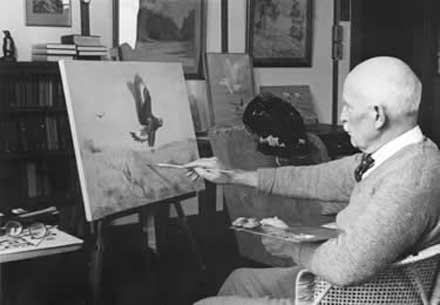
At least four major museums offered jobs to Brooks in his early years including the Provincial Museum in Victoria. He turned them all down. He was a free-lancer and a steady job would have driven him mad.
His bird skins and collections were on a scale of any major museum and they served as his library for reference to his illustrative work. Brooks paid attention to every detail and was very fastidious. He insisted labels should carry all pertinent information on the specimen and went so far as to publish a paper on the importance of these details.
In the field, Brooks usually wore knickerbockers along with game pockets strapped around his middle with wide straps slung over his shoulders. He also packed binoculars around his neck and sometimes a telescope. Canadian writer and naturalist, Hamilton Lang, said Brooks brought an air of dignity while collecting his bird specimens and “He tramped about the Commonage with the stiff backed plodding gait of an old country gentleman.”
Lang writes that Brooks was generous with his time and often instructed young naturalists when they came to visit him in his studio. He was in the habit of giving away his paintings as gifts to friends at Christmas, or as a token of appreciation.
On the night of the Annual Banquet of the American Ornithologist’s Union in Ottawa in 1926 Brooks was at the head of the table about to receive a gold medal award for his bird paintings. He had just listened to a long oration of himself by friend and poet Wallace Havelock Robb. Brooks was never one for speeches and, upon introduction by Robb, rose from his chair, took the medal from Robb’s hand, stuffed it in his pocket and said, “Not Guilty!” and promptly sat down.
Bio Courtesy of Ron Candy, Director/Curator, Greater Vernon Museum and Archives (Vernon, British Columbia, Canada)
The Museum has the largest permanently displayed collection of Allan Brooks paintings in the world.
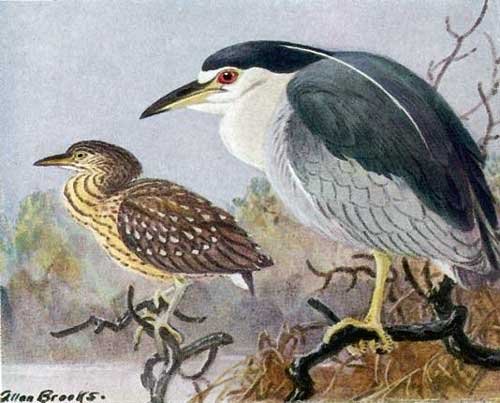
Black-crowned Night Heron
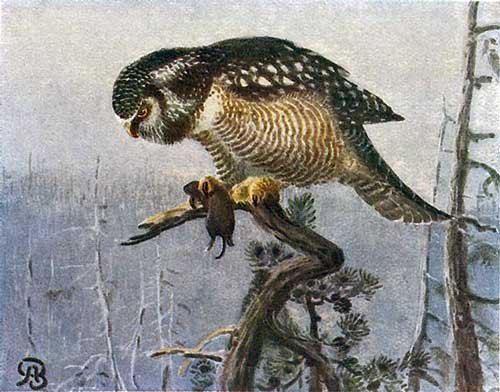
Northern Hawk Owl
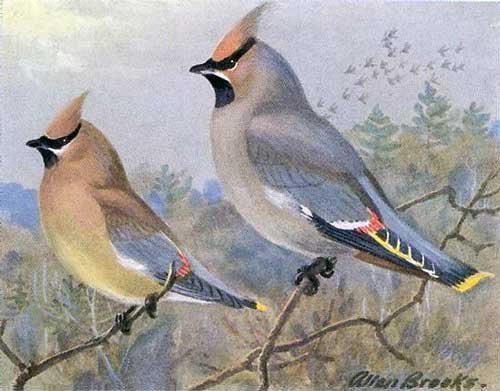
Cedar and Bohemian Waxwings
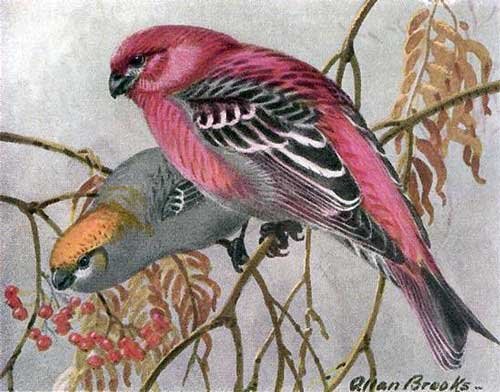
Pine Grosbeak
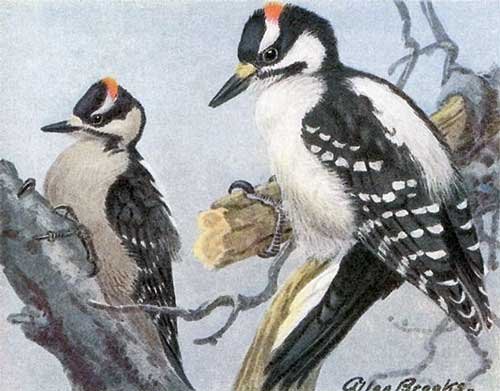
Hairy Woodpecker
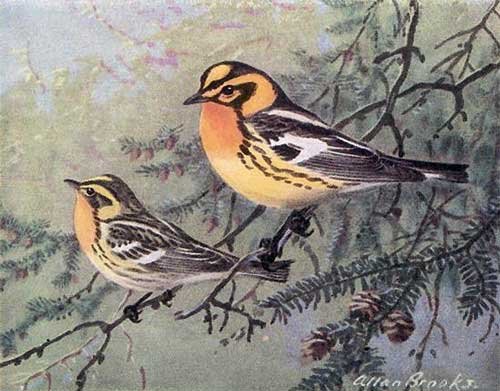
Blackburnian Warbler
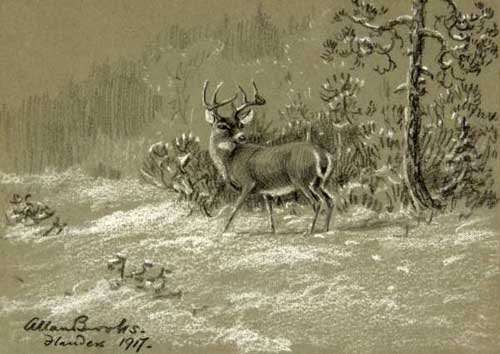
Painted in Flanders (Belgium) 1917
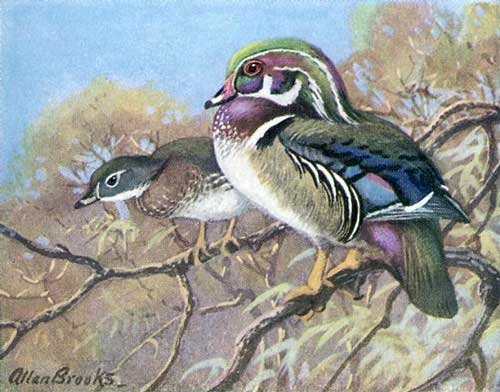
Wood Duck
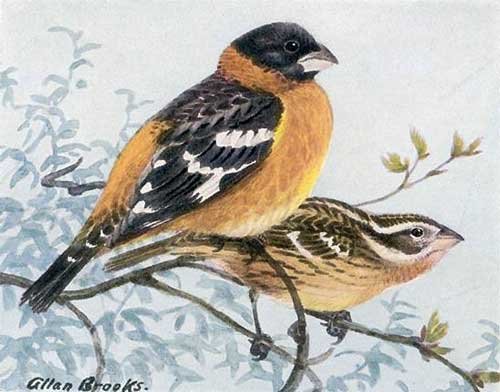
Black-headed Grosbeak
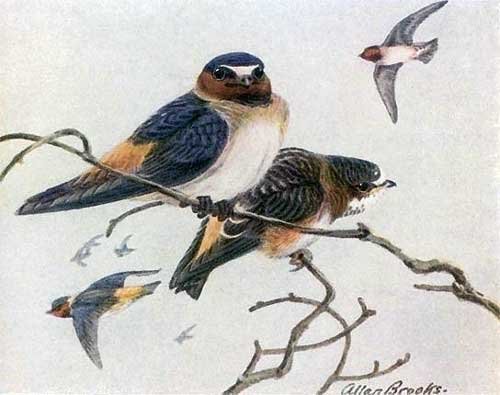
Cliff Swallow
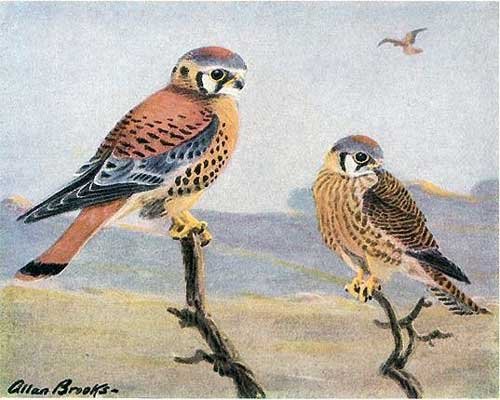
Kestrel
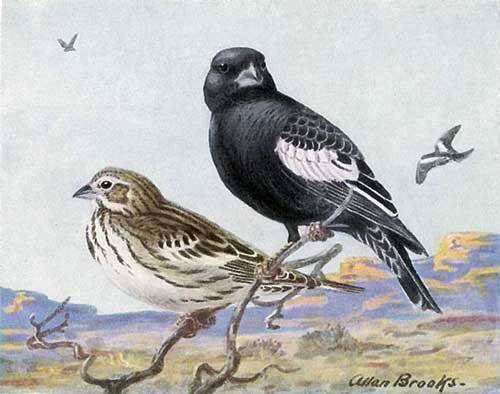
Lark Bunting
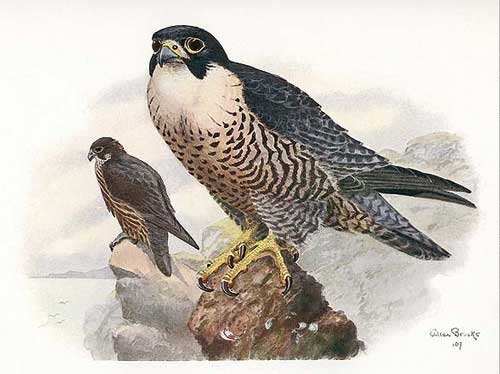
Peregrine Falcon
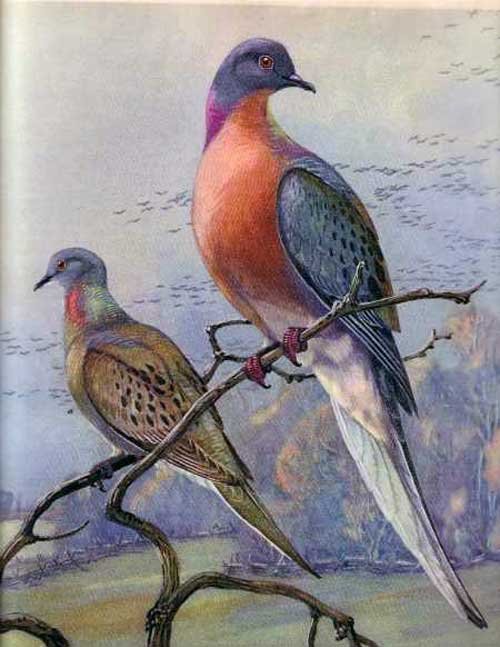
Passenger Pigeon
He was born in India, but lived most of his life in Canada, painting North American birds during the first half of the 20th century. He took time out to fight in World War I, becoming a sniper on the Western Front, and winning the DSO.
After witnessing the carnage of man's inhumanity to man, he returned to find solace in painting birds from nature. He travelled all over the world pursuing his hobby and vocation. He never held a regular job as he felt he could never cope in the strait jacket existence that entailed. He was a free spirit to the end... Painting birds gave him the inner peace that made him one of the world's top wildlife artists. |
 Great Canadian Heritage Treasure Great Canadian Heritage Treasure |
 |
|
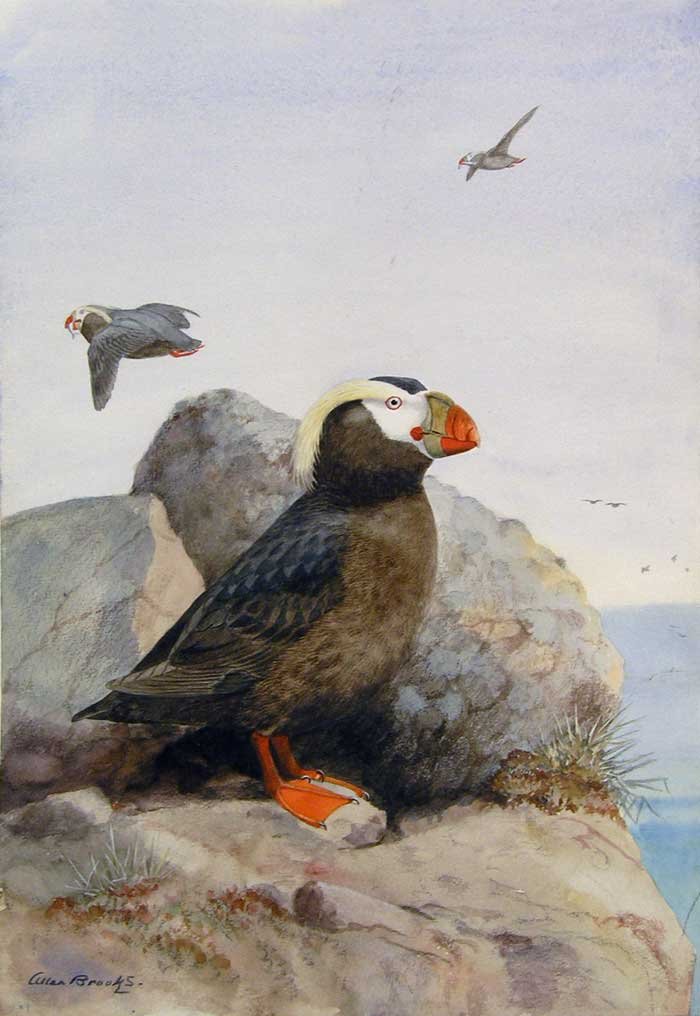
| Tufted Puffin - Major Allan Brooks DSO, c 1926 | |
| Orig. wc - Image Size - 61 x 71 cm Found - Toronto, ON |
|
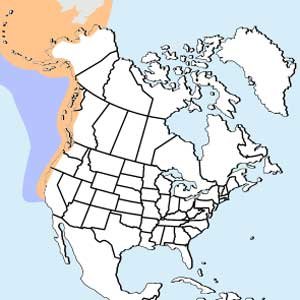
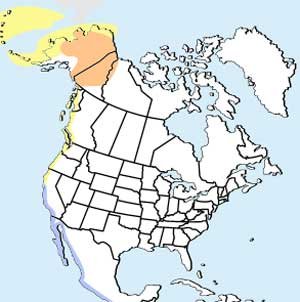
Ron Candy, Director/Curator of the Greater Vernon Museum and Archives which has a large collection of Allan Brooks originals, believes this painting was made in 1926 for The Birds of California. The Tufted Puffin is a pelagic bird which can be found along the entire Pacific coast of Canada and the United States, close to shore during the breeding season (brown), when it nests among steep coastal cliffs, and further offshore in the winter months (blue). This stunning looking bird is only pigeon sized but can fly like a dive bomber, and dive and dart expertly many feet under water as well, as it hunts for small fish. |
|
 A more fabulous bird portrait is hard to imagine, than this of the Tufted Puffin by famed Canadian bird painter Allan Brooks.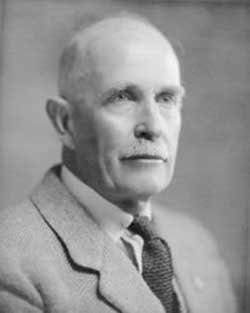
|
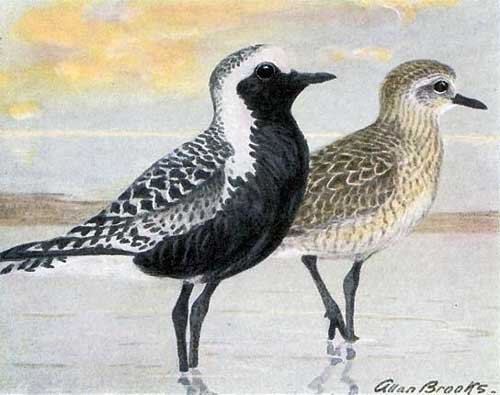
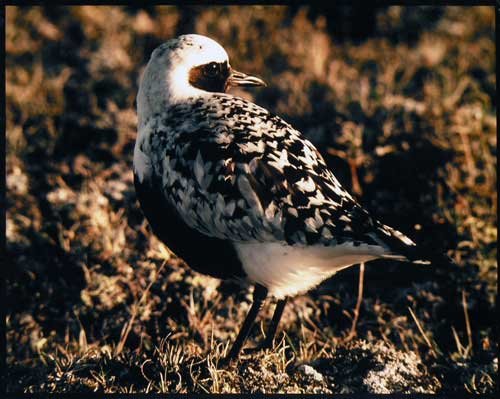
Hans and Allan - A Boy and his Hero
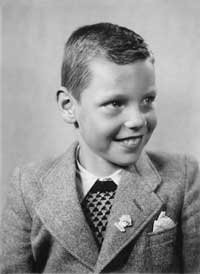
I like to think that the first words in English I learned - as "Hans," a 9 year old Swiss immigrant to Canada in 1950 left - were "Allan Brooks."
I still remember the exact moment in 1951, and the library corner of the room in the rural public school in Southern Ontario, when I opened up a nature book and his name - beneath a stunning bird picture - leaped out at me, and burned itself forever, into my subconscious, to join a list of other Great Canadian heroes, Champlain, Cartier, and Frontenac.
By then Allan had already been dead for six years. But his legacy through his work, inspired others, like me, to carry on educating the public about the wonderful natural world around us.
His glorious bird pictures profoundly effected me. Actually I don't remember the bird painting I first saw, but my mind's eye can see his signature clearly almost 60 years later. He was the guy who made the magic...
When the Toronto Star Weekly started to print full page portraits of his paintings I cut them out and pasted them into scrap books which i treasured greatly for years after. I eagerly awaited the weekly trips to town to pick up the next issue of the magazine.
I started to seek out the birds he painted and to collect bird nests and eggs OUCH...
Allan Brooks started me on a lifelong passion for exploring nature, and for birding and bird photography, and for communicating it to others, like he did to me.
In the 1960s I frequently went on photography expeditions, with Isidor Jeklin, one of the world's top bird photographers.
Isidor was also probably the world's top bird photography exhibitor in international salons, winning hundreds of Gold Medals for his amazing photographs of birds.
Together, toting our Nikons and Hasselblads, we hiked through many southern Ontario beaches, fields and woodlands, seeking out new birds that we had not already photographed.
Then, two years, spent as a CUSO teacher in remote Uganda, East African schools, gave me wonderful opportunities for photographing all kinds of exotic birds and animals.
Later, 14 years spent in the Canadian north, in the remote arctic and sub-arctic regions, opened up new avenues to explore the rich variety of Canadian birds, on nesting grounds which few Canadians ever get to see.
|
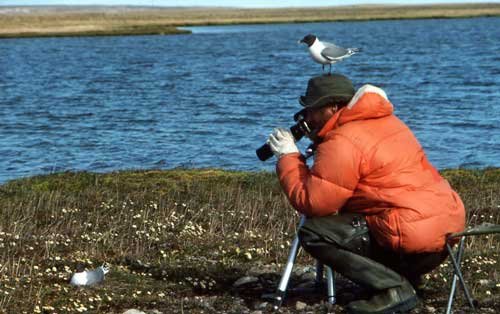
|
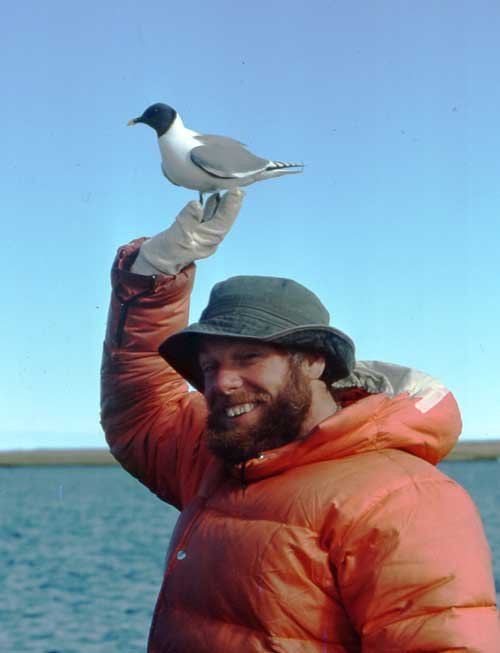
Below, no not Photoshop, just comfortably settled in the hand of a friend... Kindly note, in neither photo is the bird's beak open, shrieking sounds of protest, terror, or alarm... The bird is completely at ease with the photographer. So much nature footage, of birds and animals, even that shot by National Geographic, shows them running in terror from the photographer, or snapping at the very expensive National Geo helicopter. Or polar bears floundering madly on ice floes, trying to protect their young, or caribou, or moose, running in panic, at break-leg speed across broken ground and tripping over logs and stones. Those budget driven photographers have more the relationship of the trophy hunter with wildlife, than that of a naturalist, who sensitively accommodates him or herself, to the welfare of the bird or animal they are seeking to photograph. Dead or maimed birds and animals are just some of the collateral damage that commercial nature photographers (including National Geo, Walt Disney, Wild Kingdom, etc.) routinely exact to "get that thousand dollar picture" for their editor, or footage for their film or television program... |
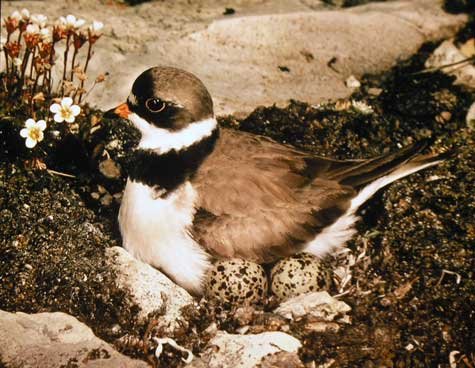
The Canadian North - I ultimately spent 14 years in the Canadian north - the arctic and subarctic - where I pursued my birding hobby.
Living in the remote North West Territories, where people are few and the landscapes vast, allowed me to accomplish a number of birding landmarks.
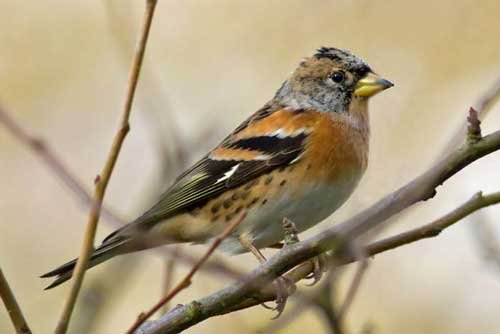
While living in Yellowknife, NT, I reported the sighting of a Brambling - an accidental from Europe below - which at that time (1981), was only the third sighting of the bird ever reported in North America.
I received phone calls from excited birders from all over the US, asking me to describe it and how I found it - it came to our feeder with a flock of buntings. Its unusual colouring made me run for my European field guide.
Oddly enough, though I was a professional cinematographer by then, and it stayed three days at our feeder, as scores of people streamed into our house to see and photograph it, through the living room window, I never took a picture, not even a proverbial record shot. To me it was just normal birding - seeing, appreciating, learning, and sharing...
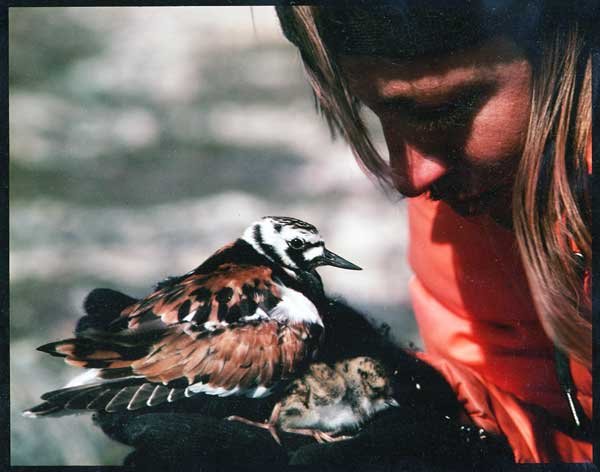
With patience, knowledge, skill, and understanding, you can build up trust with wildlife. To illustrate the point, I directed my wife to shelter a Taligvak (Ruddy Turnstone) baby - which I found, running lose on the tundra - in her gloved hand. The mother soon showed up, quite upset, naturally, that her baby had met with a possible predator. But by holding still and quietly talking to her, I calmed her down and she came closer and closer. In a very few minutes she climbed on Joan's hand, which was flush to the ground, and sat there - not standing, and not shrieking - as if the gloves were her own warm nest. Joan slowly raised the family three feet above the ground to take this photo. After a few minutes mother and baby were slowly returned to the ground. As we did so, and said our goodbyes, the mother made some soft burbling sounds, and covered her baby exactly where we put her down. |
 Astounding but true...
|
 Northern Flicker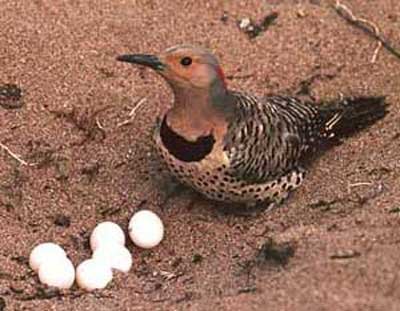
While seeking out wilderness locations for doing bird photography I made a number of "first sightings" of birds in Canada's Northwest Territories.
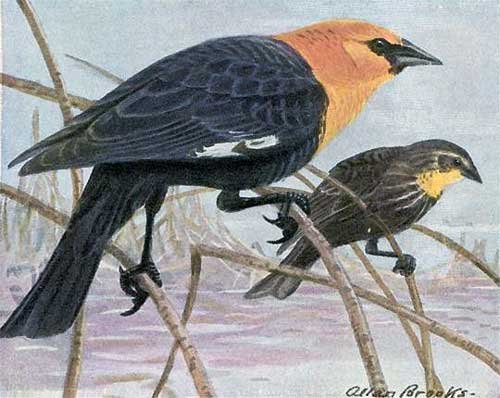
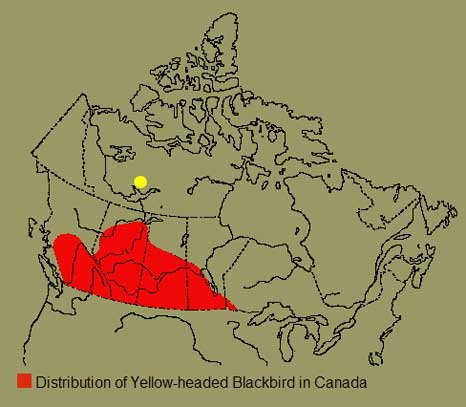
 I reported the furthest north Canadian sighting of a Yellow-headed Blackbird above which at that time had not been reported in the Northwest Territories before, establishing proof that it was extending its range yellow dot below.
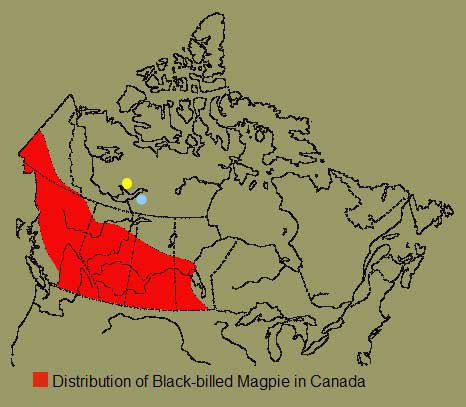
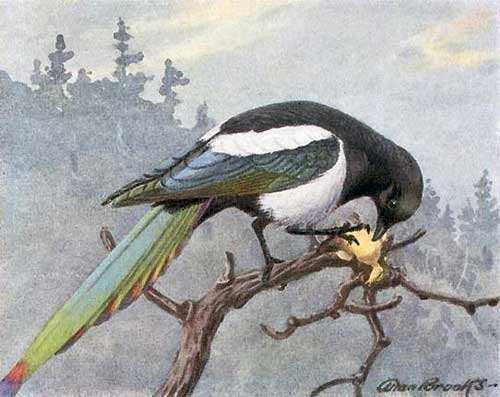
 I also recorded the first sighting, and filmed the first nesting, of a Black-billed Magpie left in the Northwest Territories, another furthest north sighting in Canada.
Modern range maps do not reflect either of these discoveries even today, and show how inaccurate these range maps really are in the border areas.
In 1979, when I became a professional film and television documentary cameraman, editor, and producer, I included my hobby in my work.
|
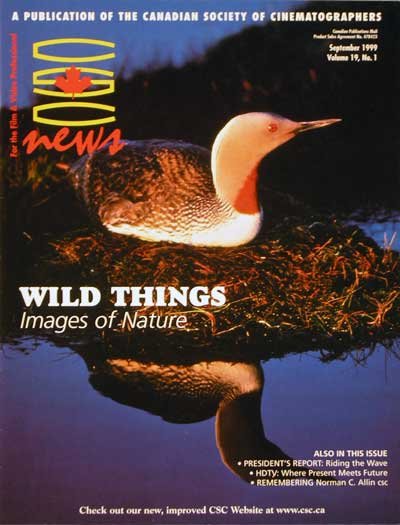
From the article "Wild Things" in the Canadian Society of Cinematographers Journal “I sensed his attack out of the corner of my eye, and was just about the raise my elbow, when I saw his outstretched talons and big yellow eyes coming at me. I absorbed the shock on my arm, but the blow rolled me over and I almost fell over the cliff. “Wildlife photography starts with the heart, not the camera.” “I remembered Eric Hosking, the British nature photographer who lost an eye to a tawny owl. I was shaking so hard I decided to quit, packed up my gear and backed away from the site, always with one eye on the owl, and he with both on me. I turned away when safely out of reach and . . . Wham! The owl struck me on the neck behind, raising a bloody gash. |
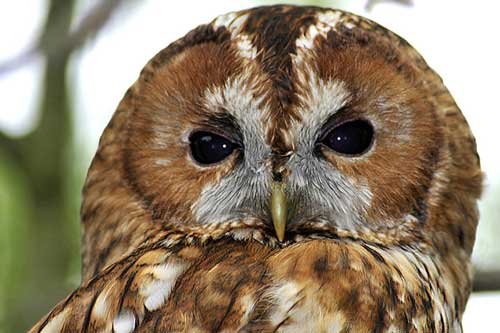
Tawny Owl (Europe), Peter van Zoest
|
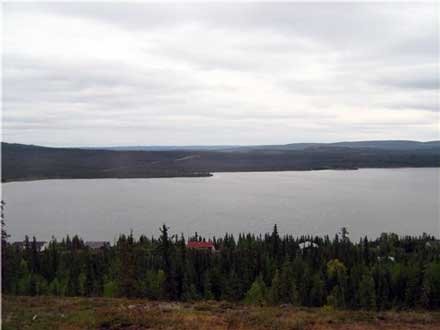
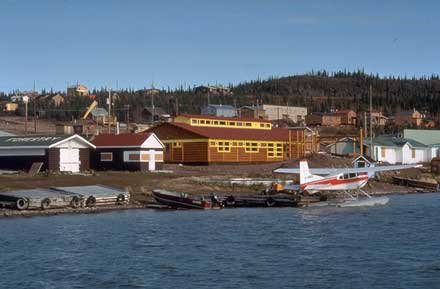
Below two television programs on Birding and Bird Migration |
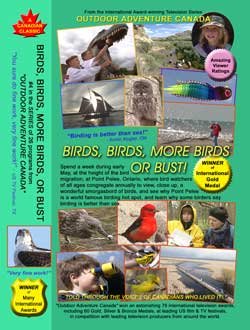
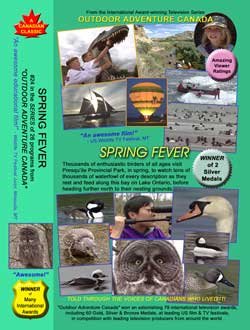
|
||
At three different US television festivals three of their Silver Medals - all for different documentaries - were beaten by three of their Golds, competing against each other, as well as a host of other programs from the best producers from other countries around the globe.
|
||
| The 'csc' designation is the top honour bestowed by the Canadian Society of Cinematography, "for outstanding achievement as a cinematographer". The Society is the professional association of Canadian film and television cinematographers. | ||
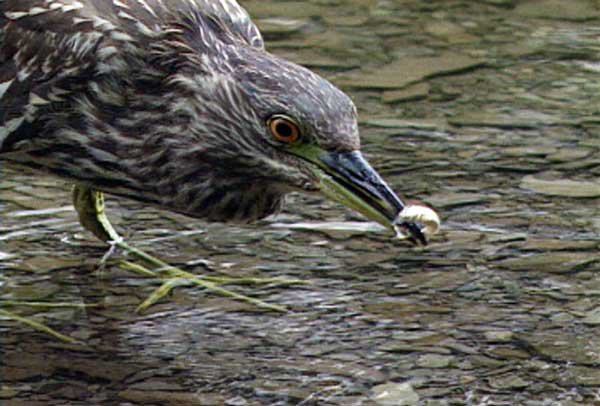 Green Heron, John Goldi 1995 - Sony DXC - D30 |
||
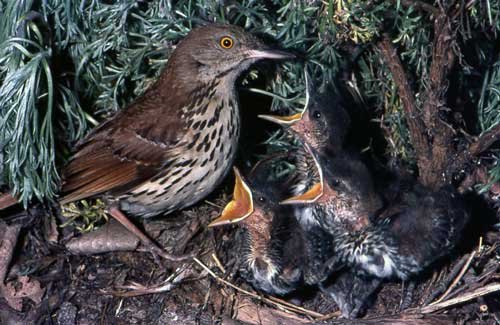 Brown Thrasher, John Goldi 1969 - Nikon F |
||
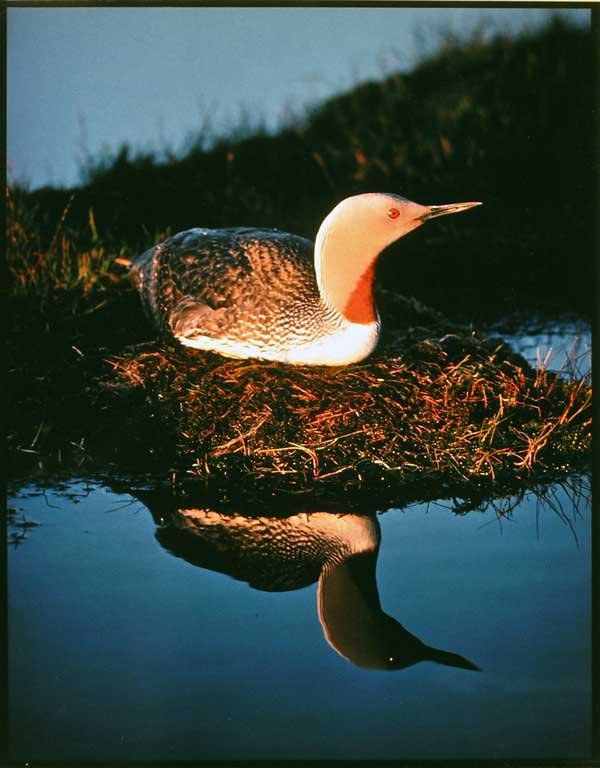
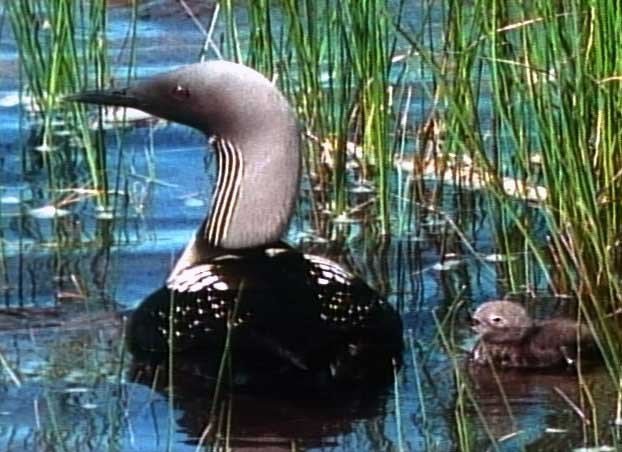 Arctic Loon & chick, John Goldi 1985 - Arriflex SR-2 |
|
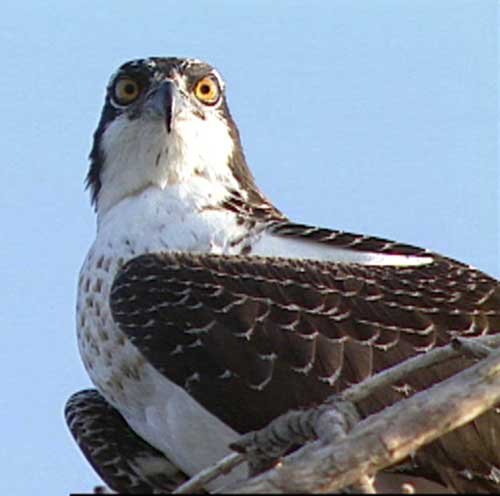
Osprey, John Goldi 1990 - Sony DXC - D30
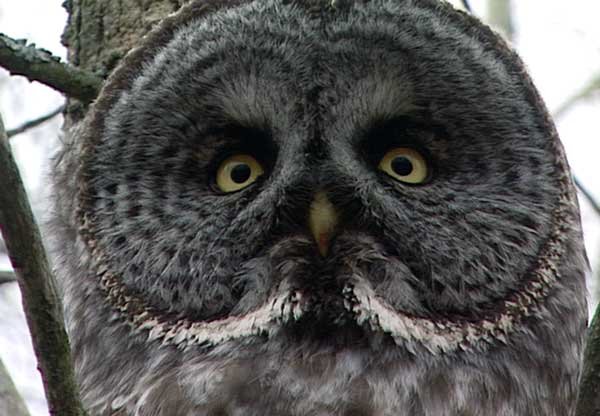
Great Gray Owl, John Goldi 1997- Sony DXC - D30
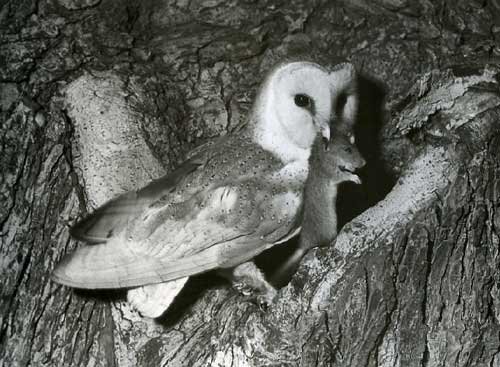
Barn Owl and Prey, Eric Hosking 1936
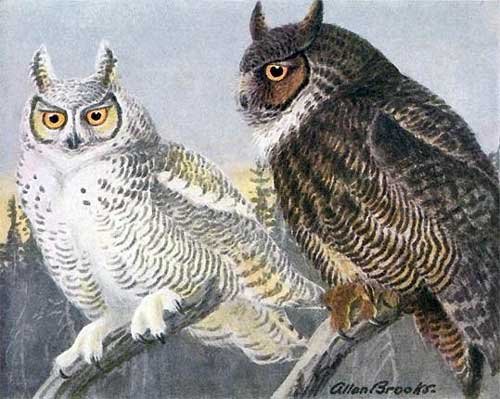
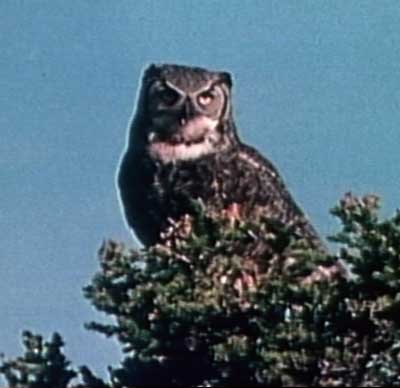
Great Horned Owl, Allan Brooks
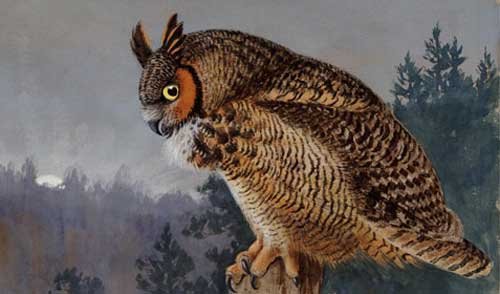
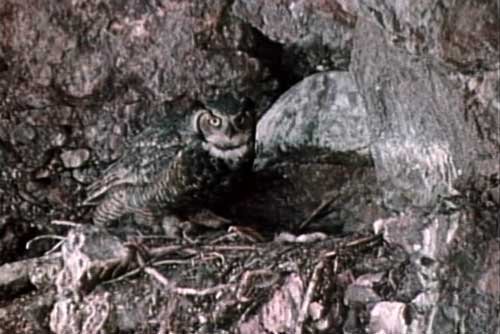
Great Horned Owl, Allan Brooks
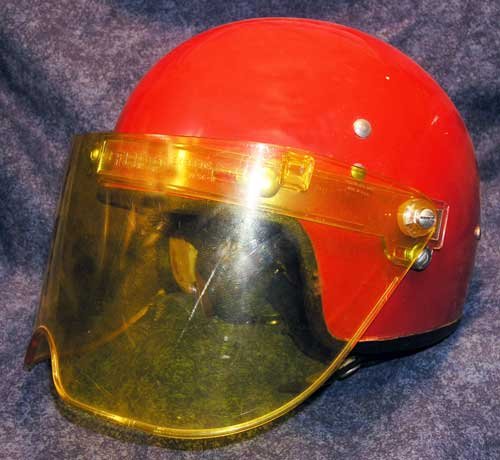
My Compton mountaineering helmet with visor adaptation
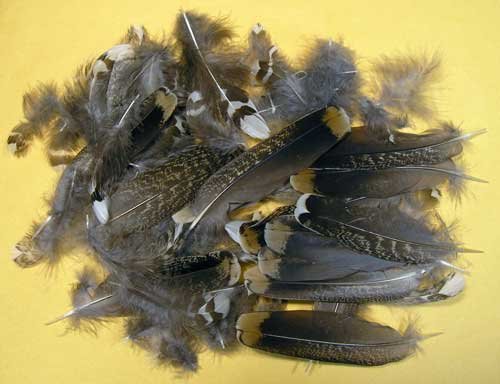
Remains of the Great Horned Owl Family
| Great Canadian Heritage Treasure |
It can be found widely distributed along Canada's west coast, breeding in the far north, then moving south for the winter.
|
 |
|
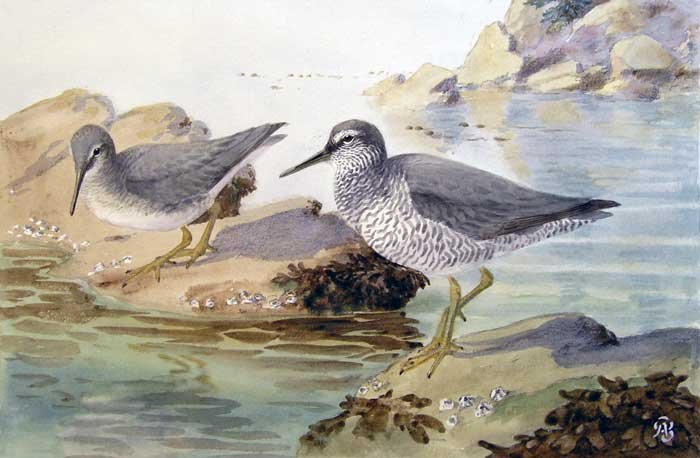
| Wandering Tattler - Major Allan Brooks DSO, 1904 | |
| Orig. wc - Image Size - 18 x 27 cm Found - Toronto, ON |
|
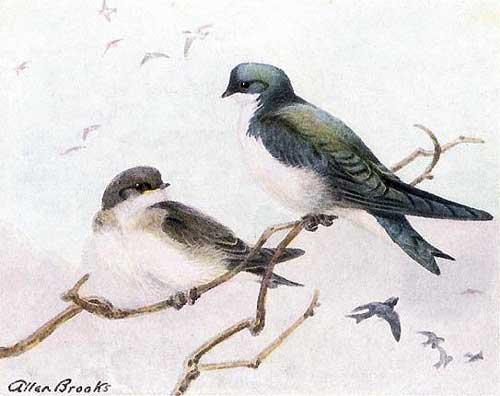
Tree Swallow, Allan Brooks
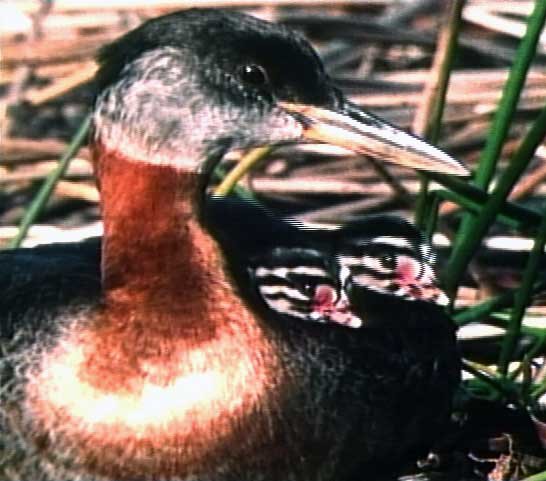
Red-necked Grebe Family, John Goldi, 1982 - Arriflex SR-2
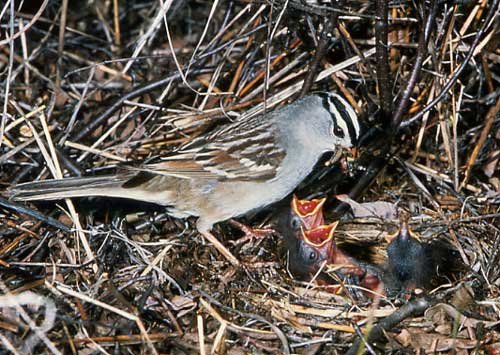
White Crowned Sparrow, John Goldi, 1985, Nikon F
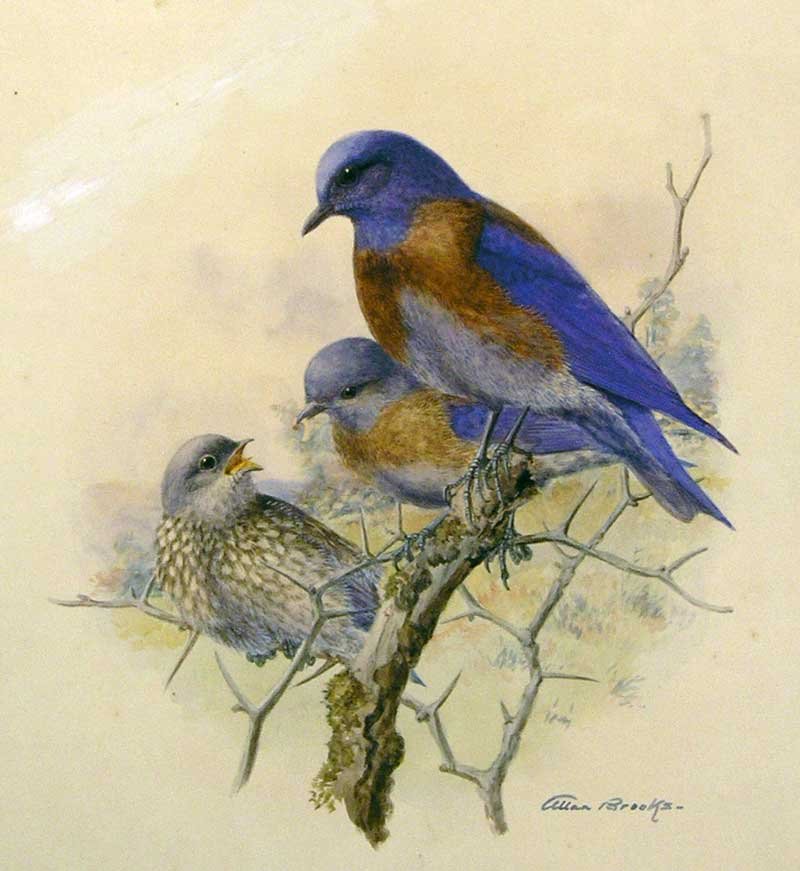
Eastern Bluebird, Allan Brooks