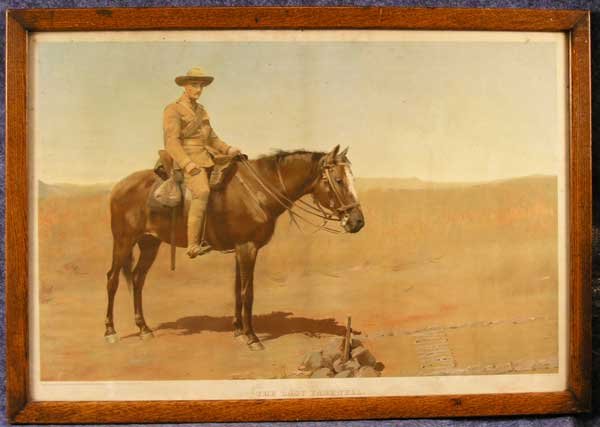
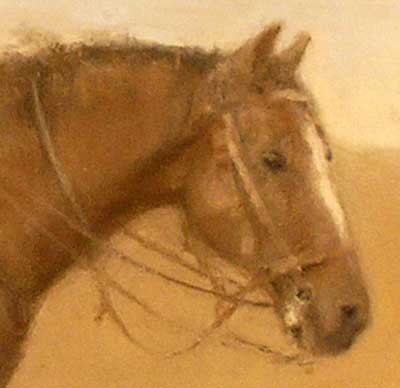
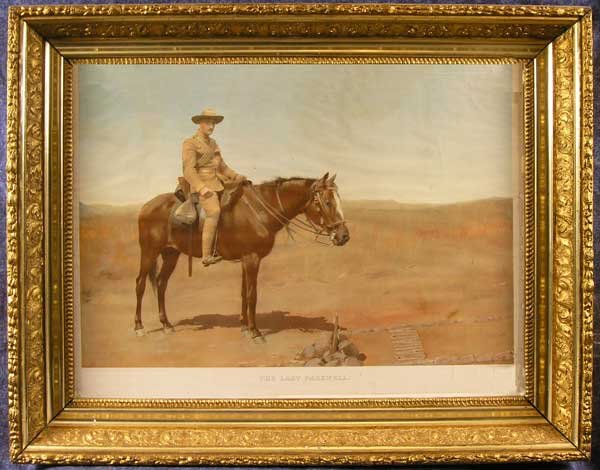
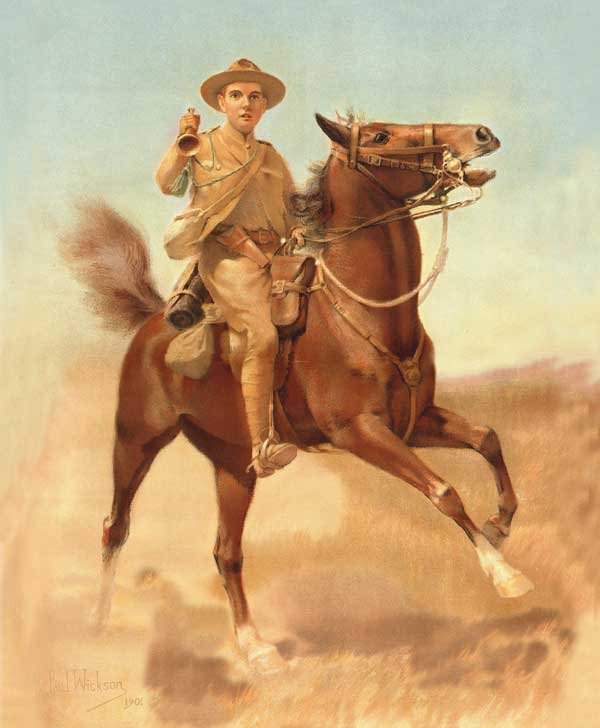
Paul Wickson's studio was the belvedere, the rooftop enclosure with all the windows, which was actually a large, well lit room. So The Last Farewell was painted inside.
The house itself, as you can tell, is dark, as all the windows are shaded by the envelopping veranda.
The windows of the second storey, called footlights because they are close to the floor, are even recessed high up under the veranda roof, so never get direct light at all.
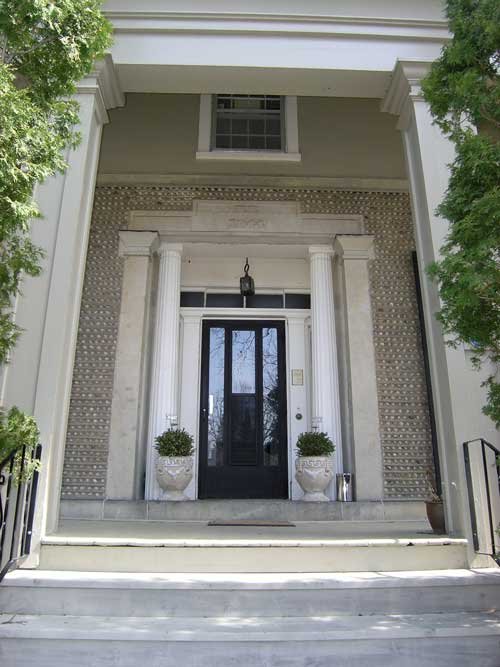
The entrance way gives a good view of the essential elements of this style of house:
-
use of Doric columns with simple capitals throughout,
-
cobblestone construction of all the walls,
- the darkening veranda overhanging and enclosing all the main floor windows,
-
the second storey footlights,
-
the steps going up to an elevated main floor because the kitchen of the house was built underneath so cooking heat would rise to become warmth for the living quarters upstairs. The lower floor has windows out back.
The massive stone lintel, over the door has the date, 1844, in raised letters on it.
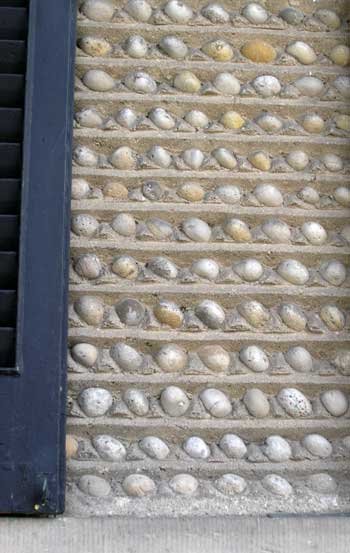
Cobblestone construction is found in about a dozen houses, and a church, in Paris. The stones were gathered from the Nith River below and artistically arranged in a bed of mortar.
The veranda was a popular addition to early 19th century Canadian houses, the idea being brought to Canada by decommissioned British army officers who copied the idea from their travels in India.
A good idea in India, where shade from the blistering sun was needed, in Canada, verandas brought too much shade on house interiors, and many were later removed.
The Regency cottages they built also included French doors - full-length, glazed doors acting as windows - to bring in all the light possible.
Perhaps these were originally used here as well, and later modified, for more privacy and better insulation in the cold winters. This may explain the lack of cobblestones under the window sill and the full length shutters, clearly not necessary to cover glass windows at the bottom that are now long gone.

Paul Wickson, though born in Toronto, spent most of his growing up years in England, where he acquired his artistic training, and his love of gardening.
He met the love of his life in England, and in his early 20s, went to Canada to marry her. He moved into her father's house and lived here for the rest of his life.
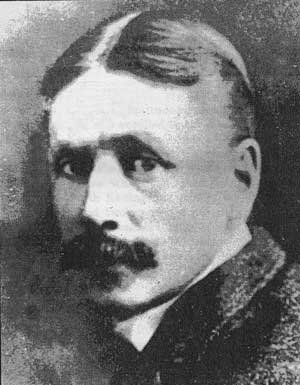
When not painting in the belvedere Paul would be found puttering about in his beloved gardens which surrounded the house.
It was while gardening that he suddenly dropped dead in September 2, 1922. He was only 62. Surely, too soon, but, for a gardner could there be a better ending...?
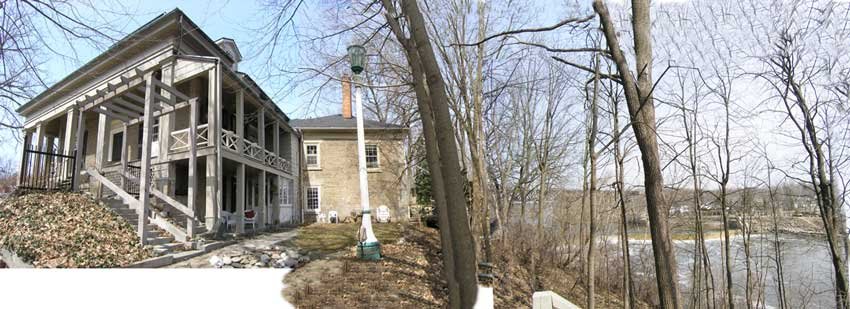
Below the grounds behind the house where Wickson could be found puttering about. Somewhere here, Paul lay down for the last time...
The picture is a Photoshop assembly of three single photographs to give a feel for the environment in which the artist's mind blossomed.
|




 Great Canadian Heritage Treasure
 How extremely fabulous to find the original for one of the most famous pictures to come out of Canada during the Boer War.